- Crew Notes
- Posts
- The Clay Pots They Were About to Break at His Feet

Growing up, I heard the story of the prodigal son a thousand times.
We focused on the characters. The son who took his inheritance and blew it. The father, overcome with emotion, running to meet him. The jealous brother who stayed home and resented the celebration.
The comparison was always the same: we're the son. God's the father. No matter how far we've strayed, His love is constant. His arms are always open.
I thought the father was just excited. Emotional. Happy to see his boy again.
Then I learned about the Kezazah ceremony.
And everything changed.
The Tradition We Didn't Know About
Kezazah was an ancient Jewish ceremony that meant "the cutting off."
It was performed to publicly shame and permanently ostracize a son who had squandered his family's inheritance and returned home.
Here's how it worked:
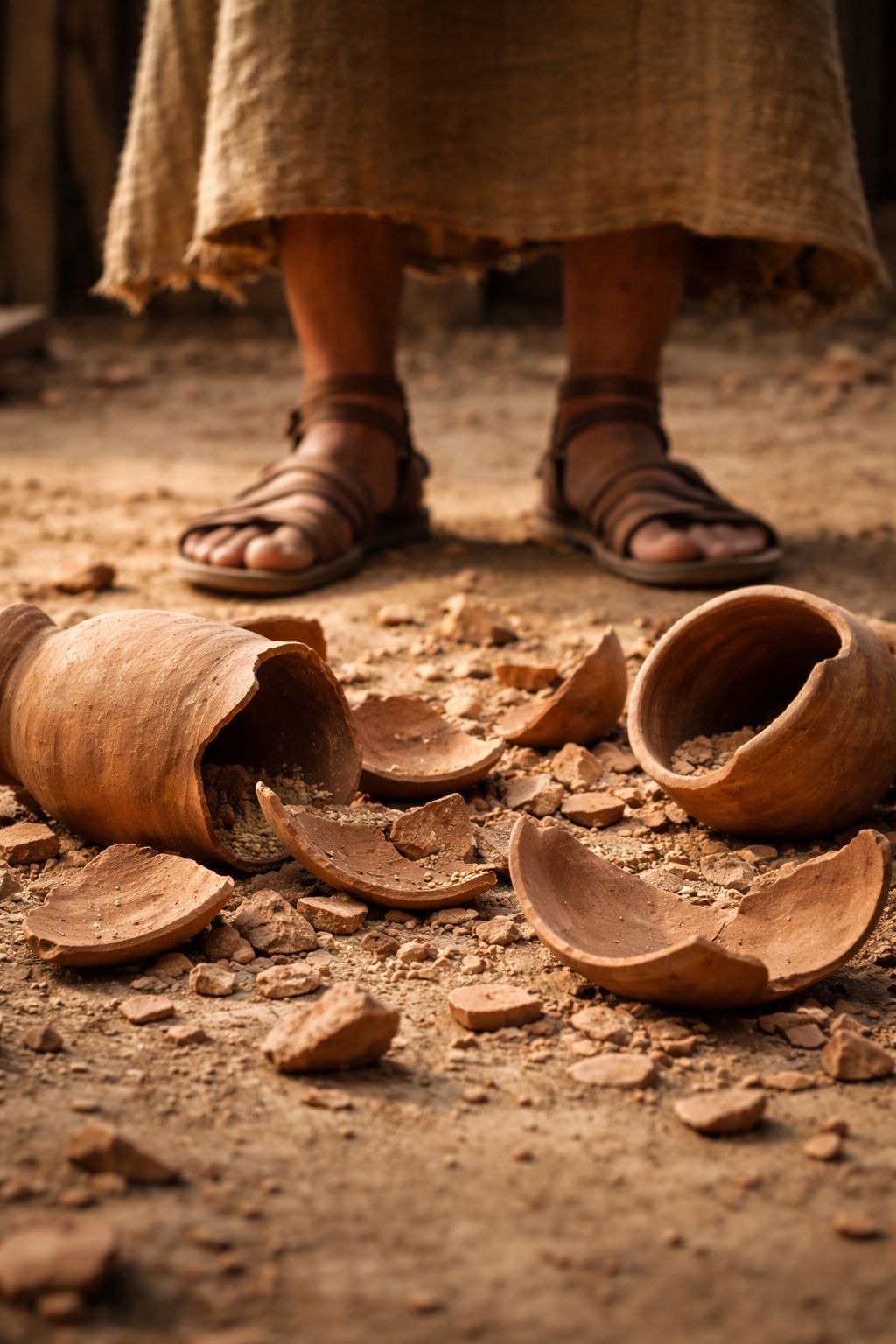
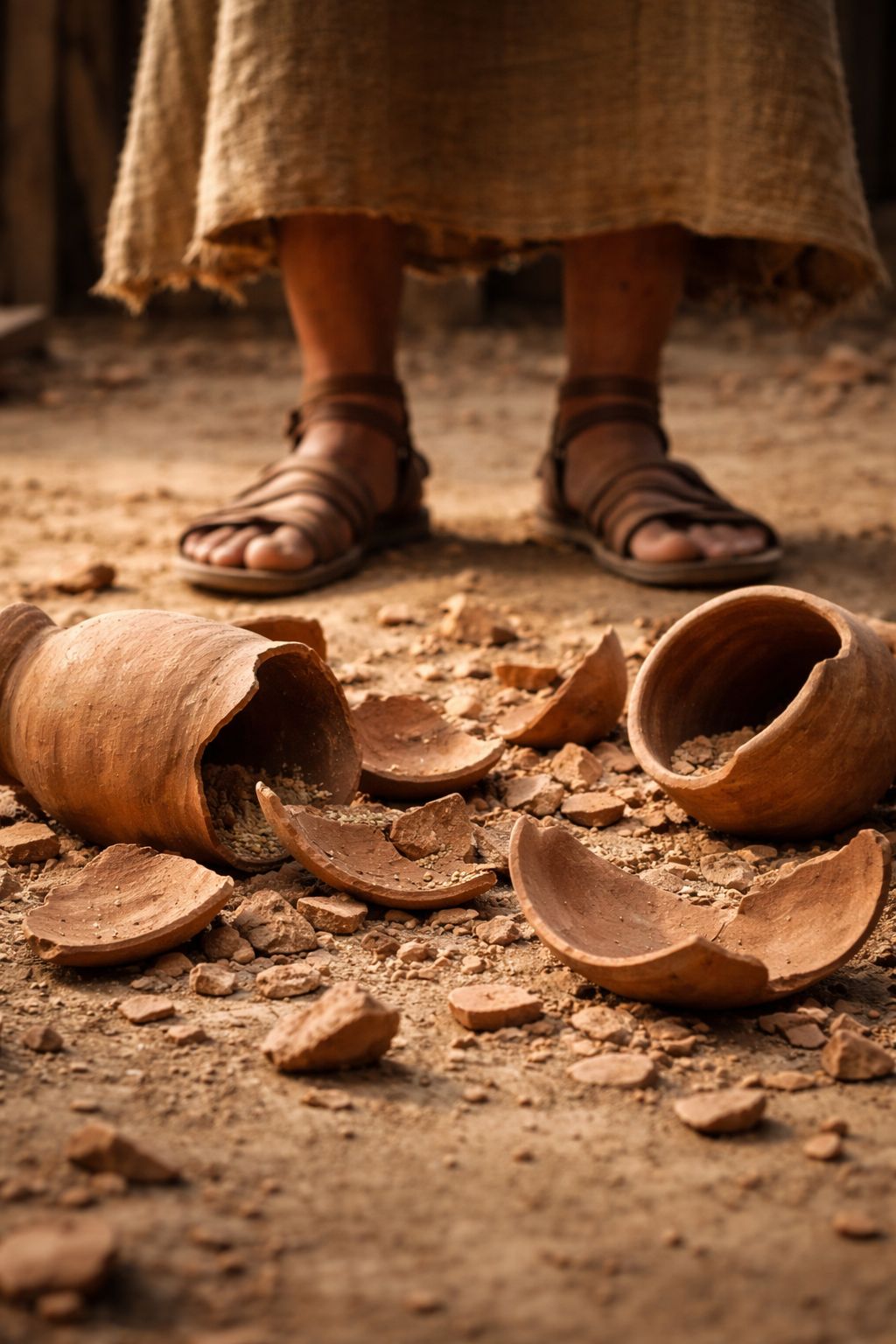
The village elders would meet the returning son at the edge of town. They'd bring clay pots. And as the son approached, they'd break those pots at his feet—one by one—while declaring:
"You are cut off from your people."
It wasn't symbolic. It was legal. Final.
Once those pots broke, you were done. You couldn't live with your family anymore. You couldn't be part of the community. You were exiled. Disowned. Erased.
In the Hebrew culture, if you had no family and no community, you had nothing. No support. No protection. No future.
It was a death sentence wrapped in tradition.
The Father Wasn't Just Running to Celebrate
Luke 15:20 (NKJV) says:
"And he arose and came to his father. But when he was still a great way off, his father saw him and had compassion, and ran and fell on his neck and kissed him."
I always thought the father was just overcome with emotion.
But he wasn't running to celebrate.
He was running to intercept.
The father saw his son "from a great way off"—which means he'd been watching. Waiting. Scanning the horizon. How long had he been doing that? Days? Weeks? Months?
And the moment he saw his son, he knew: if the village elders get to him first, it's over.
So he ran.
Not because it was dignified. Not because it was respectable. In that culture, a man of his status didn't run. It was shameful. Embarrassing.
But he didn't care.
He ran anyway.
Because his son's life was on the line.
The Son Had Already Lost Everything
Before the son even made it back home, he'd lost everything.
He took his inheritance early—which in that culture was like saying "I wish you were dead." He disrespected his father publicly, took the money, and left.
Then he squandered it. All of it. On reckless living.
Luke 15:15-16 (NKJV):
"Then he went and joined himself to a citizen of that country, and he sent him into his fields to feed swine. And he would gladly have filled his stomach with the pods that the swine ate, and no one gave him anything."
He was feeding pigs. Eating their slop. Starving.
Now he was coming home. Broken. Desperate. Hoping for mercy.
The village wasn't ready to show mercy.
They were ready to break pots at his feet and cut him off forever.
The Cruelty Wrapped in Tradition
The village elders thought they were doing the right thing.
They had a ceremony for it. Rules. Traditions. It was official. Legal. Justified.
But here's the thing: tradition can become our god.
Jesus said it Himself. You're tithing down to the penny, but you won't help the poor. You're following the letter of the law but missing the heart of it.
The elders weren't interested in restoration. They were interested in punishment. In making an example. In protecting their reputation.
Sound familiar?
We do the same thing today.
Cancel culture. Unfollowing someone the moment they mess up. Kicking people out—maybe not physically, but figuratively. Cutting them off because they made one mistake.
I think about Pastor John Gray. From my limited understand, he had an inappropriate online conversation with a woman who wasn't his wife a few years ago. No physical intimacy. But he confessed. Apologized publicly to his wife and his church. Repented. Never did it again.
And people still bring it up. Still cancel him. Still won't listen to him because they can't let go of his past.
That's the modern-day Kezazah.
We break clay pots at people's feet every day. We declare them cut off. And we call it justice.
But is it?
Or is it cruelty wrapped in tradition?
The Father Took the Shame
When the father ran, he made himself look foolish.
A respected man. Running. In front of the entire village.
He sacrificed his dignity to save his son's life.
He didn't just welcome his son home. He protected him from the death sentence the community was ready to give.
By the time the elders could get to the son, the father was already there. Arms around him. Kissing him. Declaring him his son.
No judgment. No conditions. No questions.
Just protection.
The father absorbed the shame that was meant for the son. He intercepted the punishment. He stood between his boy and the broken pots.
Sound familiar?
That's what Jesus did.
He ran toward us while we were still far off. He took the shame. He absorbed the punishment. He stood between us and the judgment we deserved.
Romans 5:8 (NKJV):
"But God demonstrates His own love toward us, in that while we were still sinners, Christ died for us."
God's Love Doesn't Turn Cold
Here's what gets me.
The son disrespected his father. Took his money. Left. Blew it all. Came back broken.
And the father's heart didn't turn cold.
Some parents would. Society pressures them. What will people say? How will this look? The dishonor. The embarrassment.
But not this father.
And not God.
This is a parable to show us that God's love doesn't change. He's slow to anger. And when we come with a repentant and contrite heart, He's faithful. He welcomes us with open arms.
He doesn't wait for us to clean up first. He doesn't wait for us to prove we're sorry.
He runs.
While we're still far off. Still dirty. Still broken.
He runs to us.

The Question You Need to Answer
The father saw his son from a distance. That means he was watching. Actively. Daily. Scanning the horizon.
God is doing the same thing for you.
He's not waiting passively. He's watching. Ready to run the moment you turn toward home.
So here's my question:
What are you waiting for?
Maybe you squandered something. Your gifts. Your relationships. Your calling. And now you think it's too late. You think the village is waiting with clay pots. You think you're cut off forever.
But God is running toward you!!
Not to shame you. Not to lecture you. Not to break pots at your feet.
To save you.
To intercept the judgment. To take the shame. To wrap His arms around you and declare you His.
The elders might be ready to cut you off. Society might be ready to cancel you. But God's ready to protect you.
All you have to do is turn toward home.
The Reframe
This story isn't just about a father forgiving a son.
It's about a father saving a son from a death sentence the community was ready to carry out.
The father wasn't just welcoming him home. He was saving him from eternal separation. From being cut off. From having nowhere to go.
Just like God does with us.
He doesn't just forgive us. He saves us from eternal damnation.
Not because we deserve it. Not because we earned it. But because He loves us. And His love doesn't turn cold.
Even when we disrespect Him. Even when we squander His gifts. Even when we come back broken.
He runs to us.
That’s it for today
keep JOY, live Disciplined

Reply